October 25, 2012

A Change of Pace

We are right in the middle of a pivoting moment of "change." Change, that whether we want to accept or not, is constantly challenging us to think smarter, faster, and in the now, because time is ticking. We need to understand that everything we are doing is affecting everything else...it's all connected in one way or another because that's just how things evolve. It's not always possible to see the finish line, but we have to push ourselves to keep running nonetheless.

So how do we keep up with this change? We embrace it. We have to. In every problem there is a solution, and many times in order to find that solution, you have to look at things from a different angle.
Last week, we talked about what we do here at MBF Trend Consulting...connect the dots. We explained how in today's world, one of our biggest challenges is constantly being able to think outside the box. Plainly put, as human beings, we are used to being in our comfort zones, it's just natural for us. However, in order to get anywhere and keep up in this fast-paced world, you have to shake things up every once in a while before the world does it for you! So as a follow up today, we'd like to point out some mind boggling, "out of the box" things that are happening right now.

photo via WWD

One industry that is consistently being shaken up is publishing. Despite efforts to re-design, edgy and innovative content, covers, and layouts, and even a staff of the best of the best industry experts, more and more magazines are disappearing into the online digital arena. The latest to do so is the iconic Newsweek, which will print it's last issue on December 31st of this year and from there on remain solely in digital form. However, as print media continues to shift to its online alternative, will it be able to attract enough paid subscribers? The same concern exists for Netflix as it is challenged by Amazon's streaming-movie service that offers unlimited movies for a few dollars less than Netflix's $8 monthly fee.

photo via NY Times

And as the old continues to be replaced by new, things need to get a move on and for the beauty industry that means mobile salons. We know we are re-iterating this all the time, but things move so fast, too fast and we know you are feeling it as well. Especially here in NYC, between work, play, family responsibilities, friends, and just everyday errands, it's hard to find time for personal grooming. Whether it be a 15-minute manicure from Manicube or a fresh blow-out from Prieto Select, convenience is the ultimate luxury and that's why beauty salons are coming to your office door (with a price of course).

video via TED

So maybe during this time of immense change, the key is to be more vulnerable, even in the workplace. Meet Brené Brown, a researcher storyteller, who has been studying vulnerability for the past 10 years and now speaks around the country at huge corporations discussing the importance of connecting and how shame, embarrassment, and fear prevent people from being creative and innovative. She explains how, "In your job you put your work out to the public. There is nothing more vulnerable than that." We firmly believe that in order to get anywhere in life and even begin to succeed, there is always a certain level of risk and failure involved in stepping outside of what's comfortable, but you just have to go for it. Time keeps on ticking and the world keeps on moving despite whether you put yourself out there or not. You are your own personal formula for change. So how are companies relating this to the way they do business?

photo via NY Times

In today's workplace, 9 to 5's have evolved into various freelance projects, going to the office everyday has transformed into working remotely from home, office buildings are evolving into business colonies, education is going teacherless, printing is 3D, and an entertainment factor is becoming more crucial to retail experiences everyday. Mercedes may even release a driverless car next year (or so rumor has it)! Not to mention, Boston Startup School (a start-up itself) trains students about the basic know-how to work in the tech start-up sector! Things are evolving and in order for businesses to keep up with this change, they have to put themselves out there and be fearless.

video via youtube

With that said, some are doing just that but in the world market by focusing on where they do business. HSBC has taken an ambitious global approach with its airport ads that continue to give insight into the future forces that will shape our world and commerce. Made in the U.S. products are selling in China and Chinese designers are actively looking to branch out internationally via online platforms like Bundshop, which features curated products designed in China. In addition, Starbucks is expanding into Mumbai this month and partnering with Tata Global Beverages to source local coffee beans.
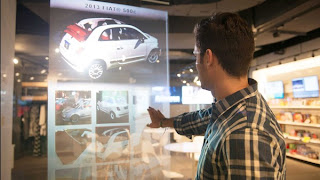
photo via ft.com

So what's next? Well, for starters, how we learn and experiment is changing as we move forward towards figuring it all out. For many media and advertising companies specifically, they depend on future labs to predict innovations and experiment with working prototypes currently on the market. These spaces are designed with mock retail environments, "connected living rooms," and countless interactive components as great resources to brainstorm and explore new approaches. Meanwhile, in the textile industry, Cotton Inc. has launched its Cotton University, which is a free online resource for both students and professionals alike to educate and engage through a multimedia digital campus.

video via blog.shop.org

While having access to all this technology and data is fantastic as we move forward, maybe the best way to truly be one step ahead is to simply ask the future what it thinks. Either way, take a risk today, do something out of the ordinary and see what that brings. Maybe a change is just what you need. 

October 17, 2012

Back To The Future

We launched MBF Trend Consulting in 2001 with offices in Berlin, Germany, established ourselves in Europe, and took MBF to New York in 2005. Since we launched, the industry has experienced tremendous change.

Initially our business focused on providing trend direction – colors, silhouettes and fabrics. Incredible as it may seem, in those days the global markets were not that integrated or connected. Still, we always provided seasonal information from major fashion centers to include New York, Paris and Milano.

If we fast-forward to today – that is October of 2012 (haha)…We now filter and consolidate information from markets in the U.S., Europe, Asia and Latin America.


When and how did you decide to pursue a career in fashion, and more specifically, trend consulting? 

Manuela: I was always passionate about fashion. I studied fashion design at Parson’s. After graduating, I worked as designer – first as an assistant at a little shop in New York basically cutting fabrics. Then I moved to Madrid (Spain), where I had my own, very little, studio designing one-of-kind of pieces. That was a lot of fun and I met many of Spain’s – at that time – up-and-coming designers. A few years later I was back in the United States when I started working as a fashion stylist for photo shoots. The work took me around the world – Australia, South Africa, Europe, Latin America. The experience allowed me to see fashion from a different perspective and eventually led to coursework in textile and surface design – at F.I.T. After presenting a project I had worked on that focused on Masaai culture and beadwork, my professor suggested I consider trend and design consulting. And the rest as they say is history.

What kind of experience and preparation helped you most when founding the company? 

Manuela: My experiences both as a designer and a stylist have been key. In conjunction with the exposure I had to different environments – having to adapt quickly to local settings, working with people I had just met from all walks, working on fashion editorials, catalogues, advertising, record labels… All of this has been key to helping me develop an eye and a sensibility for currents that influence trends – to quickly grasp trends as they evolve, connect the dots and translate them to the apparel industry. Add this to an incredibly talented team we have here at MBF and I think this is the formula for success. It’s a collaborative process and a team effort.


What, exactly, does a trend consulting company do? 

Manuela: Our work entails a lot of different aspects- the objective is to connect the dots resulting in profitable collections/brands. Research is an on-going process – we filter information and data, analyse it and translate to our products and services to include – market strategies, trend forecasting, design consulting and sustainability consulting as well elements/components of social media. And then of course, we’re always looking for better ways of sharing information – not only with our clients, but with our colleagues, students and other industry professionals. With this thought in mind, in July we successfully launched the first mbfSALON™ at Kingpins NY. We have now traveled this to Philadelphia University and are now in discussions to take the Salon international.

For you, what part of this job is most satisfying? 

Manuela: What I really love about this job is that we are working in a very fast ever-changing environment. We have a very short turn around time from analysing our research to passing it on in the right format to our clients. Once that is done we move on. It never gets boring and it's pretty much instant gratification. We get to work on different projects all the time.

What part of this job is most challenging for you? 

Manuela: I think the most demanding part is continuously challenging ourselves to think outside the box and get out of our comfort zones. We have to determine where things are going and we have to revisit things from a different point of view in order to make the right assessment of where things are going and how trends will evolve.


On another note, where do you see the future of fashion going? 

Manuela: Technology and sustainability will continue to be major drivers for all industries including fashion. Being able to understand, analyse and repurpose data will be key. And the impact of digital media is growing exponentially. The question will be how will we correlate this vast amount of data being generated, review and turn it into something that contributes to our growth, to a better understanding of our customers, and their needs, ultimately resulting in a better product. Also, digital media will continue to impact how we approach the shopping experience. We will continue to see the growth of curated collections. Retail centers will become showrooms and shopping malls will be reinvented as they focus on the “complete” experience. And we have not even scratched the surface yet with advertising.

And there we are…Although this certainly won’t impact the future of fashion, most importantly for me, has been the continued support of our clients, professional colleagues, friends and family. And of course, my wonderful team at MBF. All of whom have played an important role in our presence here today. We look forward to continuing this wonderful journey, the places we will go and the experiences we will share.

October 11, 2012

It's "Good" to be "Honest"

Today we'd like to discuss two outstanding sustainable brands, one we've spoken about before, goodsociety and the second, Honest By Bruno Pieters S/S13 collection. We were lucky enough to catch up with Sarah Schulze of goodsociety and ask her some questions about the label!

photo via goodsociety

MBF Trend Consulting: Can you give us a little background on goodsociety and what your company stands for?

Sarah Schulze: Goodsociety is a fully sustainable and fully organic clothing company who cares about the world around us. For every pair of jeans purchased, goodsociety will give a quarter to someone in need. That’s 1⁄4 of our profits, not an actual quarter. Our collection is dedicated to selected humanitarian projects. Our vision is simple, we want to give people the ability to have an impact through the simple everyday decision what to wear. Our commitment to a clean earth is through a sustainable approach in creating the highest quality of denim available. Also we believe that clean jeans should come from less chemicals.

MBF: Can you explain your new campaign?

SS: Our campaign shows a good society like a big family. We show that doing good is so easy, it’s a daily decision made in front of our closet. It is fun to be good and you don’t have to offer a sacrifice for it. We start with a relaxed family get-together in a warm, kind and joyful atmosphere. Later we fade into the lives of the family members to show the different characters of the good society. We want to appeal to a wide range of consumers. To the cool, the urban, the nature-loving, the conservative, the mature, the wild ones, everybody gets a role model.

photo via goodsociety

MBF: What is a typical day like for you?

SS: At the moment there are no typical days. One day is completely different to the next. Right now, I am at an agriturismo in the Abruzzi in Italy, after a long day in mills, factories and labs working on the collection F/W 2013/14. Last week we were shooting part two of our campaign. Right before that we were attending Richard Bransons & Carbon War Rooms "Creating Climate Wealth" summit. And I could go on and on and on. It's a very exciting and creative time, I love to be on the road, meeting people and get connected.

MBFHow did you transition from a mid-market designer to a sustainable designer and what inspired you to do so?

SS: After more than 12 years in the denim business I started thinking about production conditions for people and our environment. What was happening behind the scenes? I knew that denim is a very water- and chemical-intense business and I realized that globalization only works in one direction – toward producing companies. And they forget about the people and our environment. For me it was clear, that this cannot be the right way. We should take responsibility for the less fortunate ones. I wanted to give something back, be it clean drinking water or enough food or safe working conditions or a clean environment. So I started to look deep into sustainability and its possibilities for creating a real good denim line without having any losses of design, finesse and beauty.

photo via goodsociety

MBF: Where do you look for inspiration?

SS: Inspiration is everywhere. A large part of my inspiration is music, as I come from a family of musicians. Music turns into complete pictures or scenes, shapes and colors. The past decades of fashion and classic styles are just as inspiring as new materials or production procedures. Furthermore I am interested in human beings and being human, that's quite inspiring too.

MBFDo your clients actually ask if your collection is sustainable?

SS: About 50% of our clients are very interested and up to date when it comes to sustainability. Some focus only on the organic part of this topic and others are into the whole sustainability. The rest simply likes our fine denim for its well-fitted cuts, clean lines and utmost style. But all of them share the wish to do good and to be a part of helping others.

photo via goodsociety

MBFHow has the business evolved since we saw you a year ago at the Green showroom and where do you see the company headed in the future?

SS: When we first met at the Green showroom I was working with goodsociety as their European distributor, launching the brand. The brand has gotten some immediate attention with celebrities such as Ariane Sommer and Richard Branson, offering their endorsement of our brand. I had the possibility to get involved completely by buying goodsociety with my partner Dietrich Weigel. We have built an entire new production chain and switched from Asia to Italy. All manufacturing and refinement of our jeans is now 100 % made in Italy by our skilled Italian partners. We work together with long-established family businesses, dedicated to fabric, design, high quality and social responsibility. Now that our jeans are out in the market we focus on sales in Europe and the relaunch in the U.S.


MBFWhat kind of advice would you give someone looking to get into sustainable design?

SS: To create a successful product it is important that it can survive outside the green or eco corner. It has to convince people with its design, even people who are not interested in sustainability. Sustainability is a wide field. Use it in all its variety. Organic materials, recycling, high-tech procedures. Keep looking out for innovations.


video via Honest By

As we mentioned above, we'd also like to highlight Honest By Bruno Pieters Spring/Summer 2013 collection inspired by his travels to India and Japan. The collection combines the designers exquisite tailoring skills and clean lines with a plethora of bold color and print. Honest By, launched in January, is the first brand in the world to share the full cost breakdown of its products. The label is a public platform for designers and brands to exchange their design processes as well as research Honest By's resources concerning organic fabrics and suppliers. Not to mention, the brand is fully committed to being "honest" with its 100% transparency policy! Check out some of our favorites from the collection below!

photo via Honest By

photo via Honest By

photo via Honest By

photo via Honest By

photo via Honest By

October 4, 2012

MBF October Picks

Looking at all of today's uncertainties and changing economies, it is no surprise that companies around the world are frantic about where to take their businesses next. The roles between those formerly in power and those less predominant are reversing. Among them, the obvious economic growths in China and Brazil as well as strengthening markets in Mexico, Kazakhstan, Russia, Canada, and India. So what does the future of the global market look like? And who will be the prevailing players leading us there?

photo via NY Times

Despite China’s continued growth, the country is starting to see an overall decline in economic expansion. However their influences remain vast as many western companies continue to move into the powerhouse like Forever 21 in Shanghai and Gap Inc.'s outlet stores. Similar to Hermes pioneering efforts with its Shang Xia concept shops, Estée Lauder plans to introduce an entirely new brand targeted specifically towards its Asian customer base called Osiao. The new cosmetics line, which combines traditional Chinese ingredients with english labeling techniques and marketing, is researched locally in Shanghai and manufactured in Japan. The Asian market is one of Estée Lauder's fastest growing regions, so why not invest now? According to the CEO, Fabrizio Freda, “It will be a brand with a unique position, a brand that will give consumers a sense of being local, of being really dedicated to them."

photo via Financial Times

As China slows down, Mexico is experiencing a manufacturing revolution in everything from cars to appliances to computers. Not only does Mexico partake in free trade agreements with over 44 countries, but through NAFTA, is binded to the U.S. and Canada. For the U.S., "Made In Mexico" is an opportunity to shorten supply times by cutting costs and delivery times, especially as Mexican labor becomes more skilled. According to HSBC, a decade ago, Mexican wages were 391 percent higher than that of China. However, with China's rising labor costs, Mexico's labor is only 29% more and that is expected to decrease over the next five years, with predictions that China will be much more expensive by that time.

photo via WWD

For most of us, all eyes have been on Brazil lately as brands like Coach, Kate Spade, Tiffany's, Sephora, and Prada's new store openings in Sao Paulo (and expansion planned elsewhere if not already in the works) as well as its two fashion weeks, it's pretty clear Brazil is on it's way to establishing itself as a major fashion market. Not only will Brazilians drive growth in the luxury market, but with major increases in its middle class, there will be much more of a demand for fashionable and better quality international mid-market brands. Right now the middle class represents more than 50% of its 200 million citizens, with 50% of Brazilians aged under 30. The presence of these consumers on the web is on the rise too. Using such sites as Elike, which combines a shopping platform with Facebook, a new movement in social shopping is hitting the marketplace to lead Brazilian retail into the future. Despite the government bureaucracy and inconsistent taxation policies creating major issues for foreign brands, these companies will just have to think outside the box in order to successfully capitalize on the Brazilian market.


It seems Kazakhstan is also attracting the fashion minded with a plethora of new store openings as well, from luxury brands like Louis Vuitton to mid-market retailers like Children's Place and Steve Madden. The most recent newcomer, Saks Fifth Avenue has opened up shop in Almaty. Some are even putting Kazakhstan's market up there with the likes of China and Brazil. To put this in perspective for you, in this oil rich country, only a mere 5% of the luxury market is driven by tourists. Kazakhstan citizens have money and they want access to recognizable names featured in magazines. These consumers are fashionable, trendy, and want to show this off as visibly as possible.

photo via Fashion Magazine

Looking to neighboring Russia, Mercedes Benz Fashion Week is nearing at the end of the month and European based Wood Wood, just opened up shop in Moscow. Russian style icons are nothing but new to the fashion scene with names like Natalie Vodianova, Miroslava Duma, and Ulyana Sergeenko gracing fashion magazines and streetwear blogs all over the web. While Russia has been lagging behind in the online e-commerce world, mainly due to a recognizable liking to see and feel goods as well as postal discrepancies, online retail seems to be picking up speed. According to Adrein Henni, co-founder of East-West Digital News, Russia's online retail market is "one of the fastest-growing but the least know and understood on the planet."

photo via Financial Times

There has also been a recent influx of Canadian retailers hitting the U.S. like Aritzia and Joe Fresh while simultaneously American brands have been moving into the northern frontier. Both Nordstrom and Target look to open stores in Canada, which has already been penetrated by J.Crew, Tory Burch, and Ann Taylor. While for the longest time the Canadian market has been weak, it has finally gained some edge with a stronger currency, more stable economy, and better real estate opportunities.

photo via Financial Times

As far as fashion goes, India has made major strides with its first Fashion Fund to promote and support upcoming designers, with six finalists in the running. The award was launched in May by Vogue and the Fashion Design Council of India and is an extension of U.S. Vogue's Fashion Fund idea that originally began in 2003. Looking at such designers as Manish Arora, Naeem Khan, and the infamous Prabal Gurung, India is making it's own name for itself among fashion culture. According to Gurug himself, "The world is more open to the idea of business from Asia, China and India these days. There is an acceptance of different ideas; a growing market and need for design." And now, with India's newly opened economic policy, we will definitely see more foreign brands moving in.

The world is evolving fast – faster than ever with the majority of it out of our control. Currencies are fluctuating, irregular weather patterns surprise us, and companies' infrastructures are continuously hiring, laying off, and developing new ways of doing business. As the U.S. and Europe experience economic obstacles, China slows down, Brazil's middle class quickly develops, and as a result, new countries are on the economic upswing, we will continually see a shift in different markets and more brands looking to a global presence. What we once thought of as the world's leading nations may one day no longer hold true, as we are seeing today. New economies will gain momentum and these nations will lead the global world forward. With all these changes, the individual countries will only further have to rely on innovative concepts, remain open minded to both domestic and new international opportunities, as well learn to collaborate together in both business and economics.

photo via Yahoo! Travel

Now that we've discussed today's leading markets bringing us forward into the future, we'd like to leave you with a list of the world's happiest countries! Enjoy!

September 27, 2012

The Gentlemen's Club

Lately, everyone’s eye (and wallet) is on men's fashion. With an over-saturated women’s market and a new era of fashion forward men, the tables have finally turned. We’ve talked about the rise in popularity of the man bag as well as the menswear luxury boom on previous blogs, and today, we want to take it one step further by connecting all the dots.

photo via GQ

And the best place to start? Fashion Week! This season, despite competition from predominantly womenswear collections, menswear still managed to make major headlines with at least 40 designers showcasing men’s fashions at NYFW. Details magazine even debuted runway shows and presentations to promote the likes of John Bartlett, Gilded Age, Mark McNairy, Bespoken, and Marlon Gobel at the New York Public Library at Lincoln Center.

The distinction arises in the fact that men’s fashion is built around different ideals than women’s. Let’s face it men are just built differently and look to fabric, fit, and quality of construction whereas for women, there is more of a place for creativity and well, sex appeal. The men's fashion scene still has many barriers to break down, away from traditional suiting and casual wear as well as balancing the gap between mid-market retailers and smaller designers.

video via Nordstrom

From a retail perspective, the possibilities are endless. It seems everyone has moved into menswear. Earlier in the month during NYFW, the pop up shop entitled, GQ & Nordstrom Men's Shop opened its doors on the ground level of Treasure & Bond. The concept was developed as a supplement to the "GQ Selects," where each month GQ editors feature merchandise in the magazine that can be purchased directly from the Nordstrom e-commerce site. This strategy not only introduces an omni-channel retail format, but harmonizes both the strengths of print and digital media into one campaign. Additionally, all profits made from the pop-up will be donated to various NY charities, which nonetheless remains at ease with the Treasure & Bond philosophy.

photo via WWD

GQ is also teaming up with is Gap to launch limited edition men's capsule collections highlighting designers Todd Snyder, Mark McNairy, Ian Velardi, Ovadia & Sons, BLK DNM, and Saturdays NYC, which starts today both in stores and online. The collections will include everything from boxer briefs to outerwear with price points at $20-$348. According to the head of merchandising from Gap North America, Mark Breitbard, "Our men's business is very consistent but we think there's a lot more opportunity." He also explained how the designers remained true to their aesthetics while simultaneously incorporating elements of casual American sportswear.

photo via WWD

Other news includes Urban Outfitters introducing it's first menswear only e-catalog this fall featuring talented, stylish, and personable NYC male locals and Sears launching a new line, Outdoor Life, that specifically caters to the "outdoorsman." With this, Sears hopes to capture more cross-shoppers who initially buy hard goods and then move over to the apparel section of the store. Since the entire concept was inspired by the magazine that bears the same name, Outdoor Life, the collection is a mixture of casual sportswear, performance clothing, and hunting and fishing apparel priced from $20-$140. Not to mention, this is where the retailer will push advertising efforts. Again, the presence of print media integrated into retail formats is heavily a focus in the menswear mid-market arena to stimulates exclusivity and incorporate more traditional elements.

photo via The High Low

On the department store front, Bloomingdale's is debuting luxury shops like Gucci, Prada, and Louis Vuitton into its menswear accessory and dress furnishings departments at its flagship here in NY. According to Kevin Harter, vice president and men's fashion director this luxury "arcade" is similar to what the retailer did on its Lexington Ave side of the store in the women's department.

photo via Gentlemint

So what about men and social media? Well besides the everyday Facebook and Twitter of course, there is Gentlemint. Described as the "Pinterest for manly things," this social media platform is pretty much what you expect with a tiled layout and visually driven content. While the site is welcoming to women, the actual pictures posted say it all, with things like electronics, cars, jet skis, and beer. While the founders never had intentions for it to have a significant user base, they've had to moderate entry and place tens of thousands of people on waiting lists.

video via youtube

Despite, such a movement towards technology and the online world in the womenswear market, the menswear world seems to be taking a more traditional route. While there is a digital presence, print media, traditional advertising, and looking to more established brands seems to be more effective. However, as this fashion forward male consumer continues to get savvier and more interested in standing out, we will begin to see a rise in the popularity of more smaller menswear design houses as well as more innovative retail concepts like that of GQ & Nordstrom. Obviously there is major growth in menswear overall so things just have to evolve and we suspect, this market will pick up speed quickly. Lastly, we'd like to leave you with a fun little video from the founders of Cool Hunting as they offer menswear advice on how to pack using Tumi's menswear travel bag, the safari duffel

September 20, 2012

MBF Salon Goes to University!

As we are sure many of you remember, we first introduced the mbf Salon at the Kingpins Show this past July. Since then, we have taken our conversational platform to the road! Despite it being fashion week, we’ve been on the move…our first stop was Philadelphia University, followed by a visit at our offices from Cornell University!

We asked students from both universities to research what they think a trend and design consulting agency does as well as what they believe are the drivers in the apparel industry. For us, it was a great experience to hear the point of view of the students and learn how informed they are since they will one day be in charge. With this, we exchanged knowledge, got to hear what Gen Y really thinks, and discussed where the industry is headed.


It just so happens that the night before we arrived in Philadelphia was FNO 2012, so this sparked the initial direction of our conversations towards more trend-related topics that brought up very important points like how the industry has changed and updated itself to remain “new,” the mixture of both high and low fashion that consumers now enjoy, as well as the significance to feel like an individual whether it be on a personal level or a brand's value.


For the students at Philadelphia University specifically, we requested, depending on their major (which ranged from Undergraduates to Graduates in the areas of Textile Design, Fashion Design, and Fashion Industry Management), they look into the fall/winter “Renassiance” trend. While the dynamic here was a bit different, with twelve students pre-selected and an audience of about 80, the trend conversation could have went on endlessly – from the presence of studs on shoes, metallic threads in textiles, an upsurge in leather and velvet fabrications, and a re-emergence in Renaissance inspired wallpaper patterns, etc. Overall, we were blown away with the level of knowledge, the flow of information, and the general amount of pre-research the students actually did.


A week later, Cornell visited us and this time we tweaked the Salon by bringing in more sustainability elements like how are sustainability and technology impacting the industry and which fashion companies are integrating it in a successful and profitable way. Here, the ten attendees ranged from Sophomore to Graduate levels in Apparel Design and Apparel Management. The students were on a visit to New York City to potentially get an inside look into a few different types of companies from retail level to designers to well, us!

In our discussions, as we examined different companies' initiatives like Toms, H&M, Patagonia, and Eileen Fisher, we found we kept returning to the idea that no matter what, whether consumers are educated or not, it comes down to excellent design. We also chatted about the best way to successfully market sustainability – whether it is better to keep it separate or incorporate it into contemporary fashion lines. While the conversation also touched on other areas like co-sharing economies and gift societies, there was a definite hopeful aroma in the air. Things are changing, people are more educated, more demanding, and these people, hold the future to our world.

video via nextworldtv.com

With that said, we'd like to introduce a few shifts happening in the industry right now. A co-sharing economy is already here with sites like Air B&B and carpooling.com. The infamous Patagonia has registered itself as first Benefit Corporation in California. There are more sustainable brands, designers, collections now more than ever from long-time veterans like Sass Brown to newbie Katie Holmes' line Homes and Yang. What's next?


Ok so we've all heard about the Sustainable Apparel Coalition and we know it's comprised of major companies like Gap Inc., Adidas, Nike Inc., Nordstrom Inc., Li & Fung, etc, but what are they actually doing? Well, we'd like to report to you today that they have unveiled the Higg Index, which is a three-part scoring system for both apparel and footwear companies to measure their eco-footprint and is based on both the Outdoor Industry Association's Eco Index and Nike's Material Assessment Tool. Not to mention, it's completely free, downloadable directly from apparelcoalition.com, and even offered in Mandarin!

video via Made Collection

A new flash-sale site called Made Collection recently launched that solely features goods made right here in America. This site, much like the format of Gilt and sells everything from jeans to guitar straps, is just another step towards preserving domestic jobs, boosting the economy, and supporting a "Made In The US" mentality. Another major point to note, with the Made Collection online store, locally made brands now have the opportunity to be available across the nation to a wide gap of consumers. How's that for spreading American pride?

photo via Before It's News

London Fashion Week may officially be over but did you know Estethica, founded by the British Fashion Council (BFC) has been promoting sustainable fashion at LFW for 13 consecutive seasons? This season, the exhibition features 15 designer's S/S13 collections that include apparel, lingerie, and accessory labels like Honest By, Chiarini, Joanna Cave, Carla Fernandez, etc. Estethica not only supports designers during fashion week but offers mentoring, marketing support, and an online arena through their e-boutique on yoox.com.

A shift is happening and fast! From universities around the country to upcoming international designers to huge corporations, and online websites, a more sustainable lifestyle is the future. It's no longer acceptable to just "say" what we are going to do, we have to actually make it happen because today everything moves even quicker than yesterday. As we continue to share, converse, exchange knowledge, and support one another cross-industry, we can gain the resources to really make significant changes and slow things down. 

September 13, 2012

Getting Personal with Allison Parris

Since New York Fashion Week ends today, we'd like to celebrate by featuring the face behind the eco-friendly and socially conscious, Allison Parris New York, Allison Parris herself. We were lucky enough to attend her Spring/Summer 2013 Fashion Event last Friday and not only did we have a blast, but the clothes looked fabulous – from sequin embellished racerbacks to fun, silk party dresses with cutouts!


MBF Trend Consulting: How did you get into fashion? And what is your background?

Allison Parris: I grew up in a creative household, my mother is an interior designer and my father is a photographer and public relations consultant, so artistic development was highly encouraged! I started training in pattern making and sewing while still a teenager, and I was designing gowns for clients in the Detroit area. I then moved to New York and graduated from the Fashion Design Program at FIT with a specialization in special occasion. I’ve then worked with Catherine Malandrino and Cynthia Rowley for a couple of years before starting my collection.

MBF: How would you describe your personal style?

AP: Haha, well on a daily basis – jeans/t shirt/ no makeup…not very glam…but when going out, it’s always the highest heels possible, tutus and beaded party dresses! I love dressing up!


MBF: What is the story behind your collection for Spring 2013?

AP: The designs of SS13 have been influenced by a handful of women I know who are confident, successful, ambitious and kind. They all have an enviable distinct personal style and a dedication to what they do, which is something I always find inspiring.

MBF: We know that you utilize the factories here in New York’s garment district and we have read that you support “Made In The USA” on your blog, what inspired you to do this? And how else do you incorporate sustainability into your line?

AP: I use sustainable and organic fabrics such as raw organic silk, recycled PET satin and netting. We use recycled PET for all of our linings, as well as for many of our softer nettings and one taffeta.


MBF: How would you describe your customer?

AP: We have many different types of customers, but overall, our girls are not slaves to the fad of the week. Despite the occasional loud color, sequin, whatever – we tend to stick more to a classic style and our customers do too – at any age.

MBF: We’ve heard a couple of celebrities have been spotted wearing some of your pieces in the past. If you could dress anyone, who is someone you would want to design for?

AP: I already do dress the women I design for :) But there are always different people who I would be happy to see in my dresses for different reasons…I love both of the Deschanel sisters, Isla Fisher, any of those “cute/quirky girls.”


MBF: What are some key pieces every girl should own?

AP: Every girl should own a mini tutu and one of our new sequin dresses like the Greta or the Arden! :)

MBF: Do you have any advice for aspiring designers or people looking to break into the industry?

AP: Persistence and common sense are the two most important qualities I look for when hiring someone – it sounds ridiculous I know, but those are two qualities of paramount importance to success in the industry which can't be taught to you when you’re on the job, you have to work on it on your own. Also, read everything you can get your hands on – WWD, Vogue, blogs, etc. (industry focused, not celeb focused).


MBF: We loved your concept for Bishops & Barrons where you designed the uniforms. We thought it was very innovative! What’s next for Allison Parris?

AP: Thanks :) Still sorting out the next big partnership, so who knows! Just playing it by ear right now!

September 11, 2012

Fresh Out of the Editing Room...

So we're thrilled to say "here for your viewing entertainment" is our video of the launch of the mbf SALON at Kingpins NY.


As some of you know since Kingpins we have taken the Salon on-the-road with a first stop at Philadelphia University.

We'll keep you up-to-date on our next stops and hope to share some of the great take-aways from those Salons with all of you.

If you're interested in learning more about our Salons feel free to reach out to us directly at contact@mbf-trend-consulting.com.

Let's keep the conversation going!

One more thought. A special thanks to Kristin McDonald [Creative Concepts] who translated our concept into a brand / logo. And did it with a smile. 

September 6, 2012

MBF September Picks

Everyone wants to understand how to predict the future. With businesses changing so quickly and new innovations hitting the marketplace everyday (or less), the retail industry is more unpredictable than ever. However, looking directly at what is happening today, there are a few trends that may hold the key to the future direction of retail.

Look at how much New York City has evolved over the past few years. The infamous 5th Ave used to solely be lined with luxury shops like Prada, Gucci, Chanel, and Bergdorf Goodman. Now, the major shopping destination is graced with everything from Abercrombie & Fitch to Zara. Many contemporary shops have infiltrated Madison Ave as well, like Proenza Schouler and Rag & Bone, who are just a few among nearly 50 stores who have opened in the last year and a half. This explains the unfolding of a new customer who wants to fill his or her closet with a mix of high and low fashion.

video via Clean Technica

Last week, we spoke about how many retailers are downsizing to fit into smaller spaces. However, this shift in updating store designs goes even further with Puma's sustainable store in India and Restoration Hardware positioning itself as a showroom. Is this shift towards eco-friendly elements like solar power, rooftop gardens, and recycled wood just the beginning? Will retail shops cease stocking merchandise and producing actual sales in store, to eventually become mere "touch and feel" establishments? If this happens, brick and mortar retailers will be able to compete with online merchants by shipping products directly to customers at cost. Not to mention, more easily re-merchandise the entire store and lessen the need to have warehouses nearby to replenish stock.

video via YOOX.com

While traditional brick and mortar operations are evolving to try and keep up, online retailers are still one step ahead. YOOX.com just relaunched their website, modernizing to a super stylish new layout that features model Xiao Wen Ju wearing a digital dress on the homepage. But wait, it gets even better! The e-commerce retailer is also initiating Speak & Shop voice recognition software that allows customers to shop online by simply talking to the computer. Not only does this technology simplify browsing, but acknowledges up to eight different languages.

photo via ecouterre

Speaking of digital technology, after spending time at tradeshows in both the U.S. and Europe this past July, we can affirm it's all about digital printing. And with Constrvct, a new online tool, anyone can create a made-to-order t-shirt or dress with any image they want. It's even predicted that one day, people will have affordable at home 3D printers to produce their own clothing, towels, and utensils.

photo via NY Times

As technology continues to change the face of retail, across the city many bookstores are becoming more like galleries than actual shops, recognizing the beauty and sacredness that books offer as an art form. With irregular hours, rare finds, and sometimes in hidden locations, these stores like Karma, 6 Decades, Specific Object, and Printed Matter, appeal to everyone from the average reader to collectors and fanatics alike. These book galleries serve as a permanent think tank and not only display contemporary book art, but offer publishing services as well. It's establishments like this, that are  dedicated to the promotion and preservation of the future of their industry, that will endure as they further look to redefine the business.

photo via WWD

Overall, the entire industry is over-saturated with sameness, which challenges retailers to incorporate cutting-edge concepts, innovative marketing strategies, and unique merchandise into their approaches. Retailer Nine West is rolling out new store concepts over the next few weeks catering to themes like "The World According to 9" at its 555 Madison Ave store, which features walls filled with merchandise according to trend and a "Vintage America Collection" in SoHo that will sell exclusive products from such collaborations with Kate Ciepluch, former Shopbop Director and Monica Botkier, among many others. This is an excellent example of how companies are learning to to balance an international presence while still recognizing American pride.

photo via Media Post

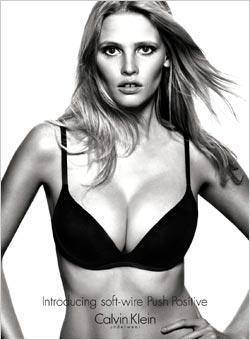
Still, some are taking their strategies straight to the internet. For instance, Clavin Klein will launch its new Push Positive bra line via a black and white video featuring model Lara Stone this month on YouTube. In addition to this, there will be an interactive Facebook App, Twitter hashtag sweepstakes, and sales associates in store will be given iPads to help with fittings.

photo via Departures

For the booming menswear luxury market, it's all about the details, with a rise in made-to-order, made-to-measure and bespoke clothing. From building a full suit at Brioni, Ascot Chang's custom shirtings to Giorgio Armani's made-to-measure tuxedos or Louis Vuitton's custom Taiga briefcase, men can now customize everything from head to toe. According to the CEO of Brioni North America, Todd Barrato, "Men like to be involved in the process." In today's world, consumers in general continue to look to buy more meaningful pieces. For many shoppers, money is tight and if they are going to splurge on something, it is going to be of excellent quality, a superb fit, and tell some type of story which leads us into our next point...


We've discussed "Made In America" before, both on our blog, Made For Us, and at our MBF Salon, Transitioning from the Recent Past to Generation Y: Concepts. Well it's making the news again and why wouldn't it be? There is a continued growing interest in the domestic manufacturing of apparel and textiles as more companies look to build relationships with vendors and factories right here in the U.S. For businesses, the advantages are plenty, like quick replenishments, more flexible timelines, and quality products. "There is a certain amount of apparel we can and should be making in this country because we can make it in a matter of days, giving us quick response and test-marketing abilities," explained Gail Strickler, the assistant U.S. trade representative for textiles and apparel. While many believe this shift towards a "Made in America" mentality is the future, questions still remain like "is it sustainable?" and "how will it evolve?"

photo via WWD

You've heard of the black market, but what about gray markets? According to WWD, "Gray markets refer to the trading of goods through legal but unofficial paths, ones that original manufacturers may not have intended." Here, originates Graymarket, a boutique in Williamsburg, that through a network of friends who collect, buy, sell, and trade clothing birthed the shop that now sells a plethora of archival men's and women's clothing and accessories. The shop, full of clothing from designers' past collections, is all unworn with tags and features a mixture of designers like Givenchy, Undercover, Gareth Pugh, Maison Martin Margiela, and Carol Christian Poell. Each of these pieces is described as "significant" and "iconic" to a particular season or designer. And just as the name states, merchandise comes from all over the place, even people's personal collections.

photo via USA Today

So what are the key themes that will lead us into the future? Despite trends of customization, sustainability, digital printing, voice recognition, and a shift towards showroom type retail establishments, there seems to be a back and forth swing between the new way of doing things via the latest technology, and still preserving the humble past of domestic sourcing and support for traditional industries. In addition, the rise in smartphone and iPad technology is slowly challenging the use of tangible cash via such innovations as Google Wallet and Square. The balance between old and new is super important as we move forward into the unknown because the best way to progress, is to learn and evolve from the past. 
 
Creative Commons License
MBF Trend Talk by MBF Trend Consulting is licensed under a Creative Commons Attribution-Noncommercial-No Derivative Works 3.0 United States License.
Based on a work at mbf-trendtalk.blogspot.com.