April 25, 2011

Wedding Crazed!

Spring is in the air (finally!) and wedding season is upon us! Since we have discussed traditions in earlier posts, and with the royal wedding only days away, we thought it would be the perfect time to blog about every girl's dream day. 

photo via springwise.com

Today, as economic recovery provokes divorce rates and “the bigger, the better attitude” defies our current society, the pressure to have the “perfect” ceremony is increasingly overwhelming. Is it really about declaring our true love for another or simply an extravagant performance (with a questionable ending) for the world to see? Have we lost all meaningful tradition as couples engage in this sacred ritual at off-price retailers or even worse, fast food restaurants like McDonald's? Or, is this merely the onward direction forward for traditional occasions as everyday societal standards begin to disappear?


photo via style.com

The wedding craze is EVERYWHERE, from websites to blogs, wedding expos, reality shows, movies, and of course, fashion. No matter where we look we just can’t seem to get enough of this wedding fever. Bridal fashion week has gone international hitting such cities as New York, Las Vegas, Barcelona, Auckland, and even Jaipur, India, to name a few. We’ve seen it on the runway countless times, most recently with Dolce & Gabbana’s Spring/Summer 2011 collection of all-white delicates purely referencing contemporary bridal lingerie.


photo via LA Times

In addition to this, more and more brands are expanding into this growing sector of wedding trousseau expenditures. Anthropolgie’s BHLDN, Vera Wang for David’s Bridal, J. Crew’s Bridal Boutique, Ann Taylor, White House Black Market's Vow, and Matthew Williamson’s recently launched bridal line are all excellent examples of leaders taking advantage of this opportune market shift. Costco, an unlikely choice, also recently joined these bridal pioneers with its concept “from shopping isle to wedding isle.” Disney is capitalizing on the idea of having a fairy tale wedding by matching a gown and accessories to your favorite Disney princess. Do I sense a hint of brand loyalty? Yes, but these brands give hope that maybe our dream wedding can come true, and affordably.


According to a survey from David’s Bridal in 2009, 50% of brides prioritized to spend less than $800 on a dress and 54% said a designer dress was unimportant to them. If a bride can look stunning on her big day at a lower price why not? On this note, another huge trend hitting brides-to-be is the DIY ceremony. Whether it’s due to the idea of the cost-effective wedding or simply more access via the internet, brides can personalize everything from their centerpieces to invitations, food, even their dresses by reworking vintage gowns. Maybe we can have it all, tradition and at a decent price.


On another note, who isn’t following everything to do with the royal wedding? Kate Middleton’s fairy tale is about to come true with the big day booked for April 29th. What's the most important thing about any girl’s day? The dress of course! Minute by minute reports have kept us in suspense about who the mysterious designer is. Princess Diana’s, Queen Victoria’s, and Carolyn Kennedy’s dresses have all been marked in fashion history as will the soon to be royal bride's gown.


So what does all this mean? Are increased divorce rates leading us to have two or more of these “fairy tales?” Or, is there more pressure on having our dream wedding come true with more access to advice, resources, and DIY projects? Either way, this one moment in time brings lightness and balance to the chaos of our everyday lives. It is a time to declare our love and trust in another, by taking a step back from our hectic daily routines and enjoying the company of loved ones. Is all the wedding craze worth such a hefty, exhausting, price, both monetarily and physically, for such unforgettable memories? Two words, I DO. 

April 21, 2011

A Tribute to Our Earth

In celebration of Earth month, today's blog post is dedicated to the latest events focused on improving sustainable and ethical practices within the fashion community. Like Julie Gilhart states in her most recent talk at Afingo's Fashion Forum at FIT, the best strategy to promote eco and social consciousness is through education. Through consulting, university lectures, media, and public conferences, people of all backgrounds are recognizing that sustainable fashion cannot move forward solely by smart, attractive branding and marketing tactics. Designers, industry insiders, and consumers alike must first be educated and understand the ins and outs of what truly defines sustainability in order to really embrace it and take things to the next level. 


Earlier this month, Fortune held it's annual Brainstorm Green Conference. Bringing in some of the world's best thought leaders together, the event allowed them to explore "innovative ways companies can drive sustainability-based transformative change initiatives." At this three day event, all issues ranging from climate policy, green packaging, coal, green marketing, China, to electric cars were brought out in the open for discussion. In case you missed it, selected videos from the event are available via their website. Click here to get started!

                                                  photo via: MBF Trend Consulting 

More recently, New York's Fordham University also introduced it's 1st Annual Fashion Law Institute Symposium this past Friday. Discussing various topics such as new developments of eco-friendly strategies, preventions of greenwashing, and production concerns in today's economy, the conference brought together fashion industry experts from all areas to speak about today's most pressing subjects. Panelists included representatives from LVMH, Garment Center Supplier Association, BCBG, Harper's Bazaar, Zero Maria Cornejo, and Cooper-Hewitt National Design Museum, just to name a few.


New courses are also being developed in universities so students and working professionals are better informed in adapting to today's environment and able to respond with innovative design and exciting new directions. California College of Arts newest offering in professional development, the Fashion Sustainability Workshop Series and Certificate Program, is now accepting applications. This unique series focuses on teaching new tools and strategies by integrating principles of ecology and applied to real-world projects. The faculty list is extremely established, including leading visionaries such as Bob Adams, designer/farmer and IDEO Fellow; Timo Rissanen, pioneer in no-waste pattern cutting and coeditor of Fashioning the Future; and Kate Fletcher, author of Sustainable Fashion and Textiles:Design Journeys. However, this is not the school's first effort in pushing sustainability forward. Graduates of the school have gone to work with eco-friendly brands such as Natalie Chanin and Loomstate, or have launched their own eco-friendly labels.


Furthermore, the magazine industry welcomes a fresh new face as Six Magazine just made it's debut a few weeks ago. According to founder Alina Ratsep, "Six" refers to fashion's "sixth sense". She states, "It's because ethical fashion should be the normal way fashion industry operates. It shouldn't have to be explained--this is something we know and feel on a certain level, the sixth sense level."

photo via: Ecouterre

The magazine celebrates designers, individuals, independent brands and companies who are creating a more ethical and sustainable future for the fashion industry. It represents slow fashion, a respect for clothes and it's makers, and a return to individuality. The magazine is comprised of a daily blog, a digital quarterly, and a biannual print edition. Click here to read their first issue free!


Overall, we are noticing a huge development in the rise of sustainability, within and outside of the fashion industry. As the topic is being introduced in schools and lectures, students are slowly becoming familiar with the importance of social and environmental responsibility, possibly years before entering the workforce. This allows for a new way of thinking, leading to innovative products and businesses. As one of the biggest obstacles is changing consumer behavior, we also believe that an emphasis on education will lead to a development of a Sustainable Index Standard. This allows a common language that can be clearly understood and trusted by both industry insiders and consumers.  Furthermore, companies should also come up with incentives to motivate consumers to change; automatic behavior needs to change to make a conscious choice. We hope, and strongly believe, that the fashion industry will pave the way in this endeavor.


As we have always said, eco-fashion is not a trend but the future! And although Earth Day should be every day, we hope that this month will particularly inspire you to be more proactive in taking better care of our planet. And in case you are a New Yorker, we encourage you to check out EDAY to get the latest schedules of New York City-based Earth Month and Earth Day events.

April 13, 2011

Slowing Down the High Speed

Don't get us wrong. We are definitely all for technology and the new digital era we have found ourselves living in. But as we are always checking the latest tweet on our Twitter, updating our Facebook status, and typing away on our smart phones, all of this multi-tasking and excess of information sometimes calls for a break. And although we will usually never say no to high-speed anything, we are recognizing a growing trend of people beginning to value a more simplified, slower lifestyle. And amidst of what can sometimes be a busybody-like society, we can't help but agree with some of their decisions.

For one, we all know how much time we spend our work days reading or responding to emails -- it can sometimes take all day! So to help increase productivity at work, self-described "lifestyle designer" Tim Ferriss advises setting up an automatic e-mail reply at work that says you'll only be checking your inbox twice a day, at noon and at 4 p.m. It may sound ironic that checking your email less will be beneficial, but as this advise is coming from someone with two best sellers and often asked to speak at places like Google, Facebook and Harvard School of Public Health, his unordinary tips aren't something to be overlooked. When on a four-week vacation, Ferriss set up an automatic email reply that states "Thank you for your email. Sadly, it will be deleted. To regain sanity, I am taking a break from e-mail until March. If still relevant, please email me again in the month of March." (Perhaps his advise to his fans isn't too outrageous.)

photo via: GQ Magazine (UK)

We are seeing a growing number of people in all industries appreciating a longer, slower method of work, whether it's their final product or their business model.  No less than two weeks ago, avant-garde London boutique, Selfridges set up a temporary pop-up shop featuring Anya Hindmarch's Bespoke. The Bespoke collection was established in 2009 and offers a selection of classic accessories that can be personalized with an exclusive design font, along with hand written messages or drawings. Customers take part in choosing the various finishes and colors, making each product truly unique and personal to the recipient. The Bespoke shop and Selfridges pop-up location both have craftsmen on site to emboss and finish orders. As customers work closely with the makers, each product is a true labour of love, emphasizing the value of time and craft to redefine modern luxury.

 photo via: Style.com

The art of lacemaking is also making a comeback as lace is one of the biggest trends of the season. As each thread must be drawn by hand and then carefully embroidered by hand, creating a lace pattern has almost become a lost art in the fashion world and only recently it is slowly seeing a revival. Until the 1920s, there used to be hundreds of types of lace all over Europe. But sadly, as we moved on to a much fast-paced fashion inudstry where cheaper, mass-market lace made in China is preferred, the high-end lace industry has reduced to a very small area in France in a town called Caudry. Today, the lacemakers are continuing their work as design houses like Dior, Chanel, Gaultier, Jason Wu, and Valentino recognize that the intense labor of these few French women results in an incomparable product that cannot be compared to the cheaper alternatives.

photo via: FT.com

Italy has also recognized the dying trade of tailoring as the average age of tailors are 55 years old. Following Kiton's Naples tailoring school, design houses like Brioni, Bottega Veneta, and Ermenegildo Zegna have all recently founded tailoring schools to train the younger generation and raise them up as the art of tailoring is vital to the future of their businesses.

Everyday consumers are also taking note of today's fast culture and slowing down by using things until they're all used up, or reclaiming vintage. Whether it's a car, phone, computer, or toothpaste, today's research show a slowing rate of product life cycles and consumption. Consumers are holding onto new cars for an average 63.9 months, up 14 percent since the end of 2008. Cellphones are upgraded on an average of every 18 months, up from every 16 months just a few years ago. And laptops are being used for an average of 4 years and 4 months, a month longer than they did a year ago. These studies show that we are shifting from a throwaway culture to a preserving culture, even similar to the times of the Great Depression. And as the economy remains unstable, people are looking to make their purchases last.

photo via: WSJ.com

Vintage clothing has always remained popular in women's fashion. We even highlighted several flea markets in our last Los Angeles related blog post. Vintage and reworked vintage shops thrive in cities all across the nation. However, men are also picking up on the trend as vintage men's watches are growing in popularity. Often an heirloom that was worn from one generation to the next, many men today are looking not for just any kind of luxury, but one with real heritage and a story. Carefully crafted and simple in design, older, historic watches are being picked up by fashionable gents all over the world.
photo via: NY Times

"Type-ins" is also a new trend amongst the mono-taskers, as these meetings are sprouting up in cities all over the nation and even across the globe. "Type-ins" is a gathering of manual typewriter enthusiasts coming together at a bar or bookstore to type out snail mail letters and competing to see who can do it the fastest. Using machines that are often many years older than themselves, people have rediscovered the excitement of this simple, straightforward, and functional machine. Unlike today's computers where you can check your email, shop for your next outfit, and coordinate office meetings simultaneously, the typewriter limits you to focus all of your energy into simply one task. Matt Cidoni, 16, of East Brunswick, N.J., is an owner of ten typewriters and a proud member of the "typosphere," a global community of typewriter geeks. His typewritten messages are publicly shared on his Web site, Adventures in Typewriterdom. Teenagers and working adults alike are all finding a new found hobby with the old machine. And although they may be typing away on their typewriters, it doesn't necessarily mean that they are throwing away their latest technological gizmos. It's all a matter of balance.

In the end, we are not saying that we should all go back to the days of our grandparents when everything was frugally used to the last drop or tear, nor are we suggesting that we all return our laptops and smart phones. But perhaps we need to remember to that it's necessary, and even beneficial, to sometimes pause, step back, and not be so afraid of taking things slow. After all, we all need a breath of fresh air sometimes, don't we?

April 5, 2011

April MBF Favorite Picks

Los Angeles is a city famed for it's Hollywood stars and year round warm weather. As the west coast's favorite city for entertainment, food, and fashion, LA is an exciting city with a lot to offer. So this past weekend, Stacy, one of our staff members, took a short trip to escape New York's chilling temperatures and with the help of locals, compiled her list of things to do and places to see in the other side of the states.

Kicking off the month of April, we celebrate this month's picks with the best of Los Angeles.
If you ever make a trip out there, or are a LA native, we'd also love to hear your favorite spots!

photo via: LA Weekly

1. Ray's Restaurant and Stark Bar
LACMA's Ray's Restaurant and Stark Bar is barely a month old, but the place already has a huge following of both Hollywood's It crowd and local Angelinos. The eatery is named after Ray Stark, the late filmmaker and producer of iconic films such as Steel Magnolias and Funny Girl. Although the museum is really where all the art is, with an interior designed by the well-known architect Renzo Piano and a drink menu compiled by the world-famous "barsmith" Michel Dozois, the restaurant is equally as attractive as the museum's artworks themselves. Executive Chef Kris Morningstar, who's background includes top LA eateries such as District, Mercantile, AOC, Patina, and Blue Velvet, the Mediterranean farm-to-table menu is based on seasonal, local ingredients and the restaurant's wood burning oven and grill. This is what we call a perfect marriage of fine cuisine and fine art.

photo via: RGC Shows

2. Sunday Flea Markets
Traditionally, Sunday is the day of rest, but for those in LA, it's better known as the day of flea markets. The Melrose Trading Post, located in the parking lot of Fairfax High School, takes place every Sunday -- rain or shine. With over two hundred vendors and live music and street food, it is a great place to stroll around after a Sunday brunch. However, if this isn't enough for you, there are also bigger monthly flea market events such as the Rose Bowl Flea, which boasts over 2,500 vendors, and takes place on the second Sunday of every month or the Pasadena City College Flea Market, with over 500 vendors, taking place on the first Sunday of every month. Whether you are looking for old records, vintage dresses, or antique furniture, you will be sure to find something unique at a great price.

photo via: Coachella

3. Coachella
The annual three-day music extravaganza is on every music lovers' calendar months before the actual event. Fans from all over the nation gather in Indio, California to celebrate, have fun, and listen to some great live music. With camping grounds located adjacent to the concert area, this long weekend event starts from early morning and doesn't end till late at night. This year's lineup includes Kings of Leon, Kanye West, Arcade Fire, Erykah Badu, Lauryn Hill, and Ratatat, just to name a few. And if you're looking to hitch a ride, H&M is offering the Conscious Bus Service to forty lucky fans.

photo via: Travel Channel

4. LA Food Trucks
Los Angeles birthed one of the most popular trends today in food culture -- gourmet food trucks. Serving every type of food, from Mexican, Korean, Greek, Spanish, to Indian, the cuisine is as diverse as the city itself. This new type of mobile cuisine offers creative and high quality food in a convenient and affordable setting. Komodo Food Truck, Nom Nom Truck, The Grilled Cheese Truck, and the Kogi Korean BBQ Taco Truck are amongst the more popular. Located near large office buildings or busy streets, these trucks often have long lines with hungry fans. But don't be fooled, the line moves quickly and you, and your stomach, won't regret it. Most food trucks can be followed on Twitter. Click here to find your favorite!

photo via: Space 15 Twenty

5. Space 15 Twenty
On the corner of Cahuenga Boulevard lies a mini-mall that can easily be overlooked. However, this hidden shopping center includes a court yard, book store, several boutiques, and one of LA's best burger joints, Umami Burger. Their current pop-up store is TOMS Give Shop & Gallery. Debuting their spring collection and hosting various community-focused events with art and live music, the shop is definitely one-of-a-kind.

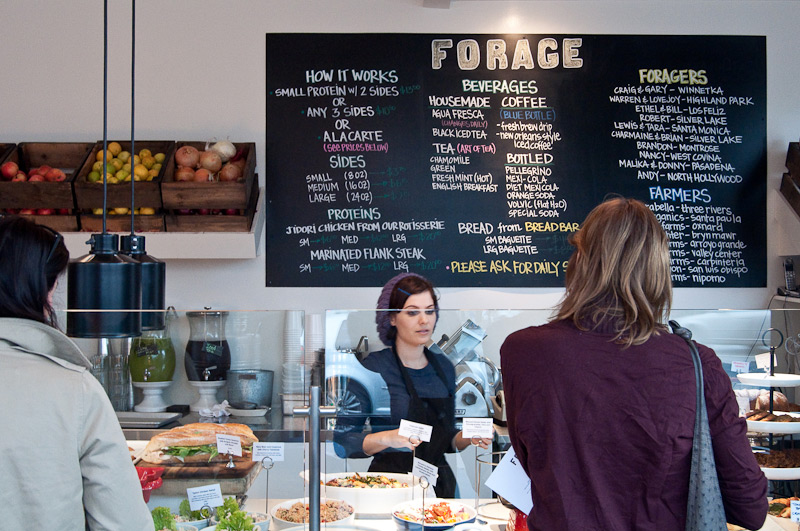
photo via: Forage

6. Forage
Simple food, local ingredients, communal dining is the general concept behind one of Silverlake's newest restaurant addition, Forage. As all ingredients are delivered fresh from small local farms, the menus are constantly being updated as they are dependent on what's available for the season. The "P Belly Sandwich," however, is one of their year-round staples and a crowd favorite.

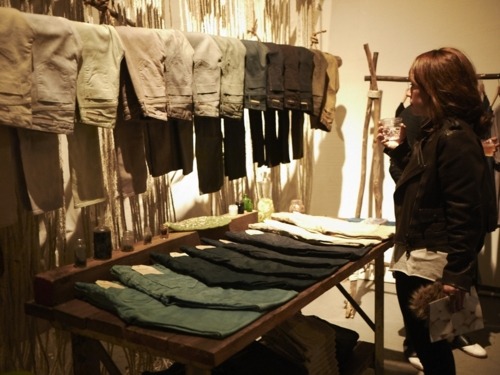
photo via: THVM

7. THVM 
Denim label, THVM recently opened their new retail space in downtown Los Angeles. Besides their own line, the boutique also carries avant-garde labels such as Raquel Allegra, Moonspoon Saloon, and Annie Costello Brown, just to name a few. The label recently collaborated with artist Krissy Morrison to produce limited edition organic hand dyed jeans treated with unusual materials like rain water, onion skin, kamala flower seeds, and indigo.


8. MOCA presents Rodarte: States of Matter
Los Angeles' museum of contemporary art MOCA's current exhibition presents the fashion and costume designs of Pasadena-based designer sisters Kate and Laura Mulleavy of Rodarte. The collection features selected pieces from their past runway collections as well as original costumes from the feature film Black Swan.

March 28, 2011

Let's Talk About Sustainability

photo credit: Leo Jimenez

Last week, Kioka Williams and her camera team made a special visit to our offices to interview the founding partner and creative director of MBF Trend Consulting, Manuela Fassbender. Kioka Williams is a student at Sarah Lawrence College in New York. She is currently working on a documentary on the fashion system and its effects on people and the environment. Today's post highlights a few excerpts from the interview. In the full 10-minute piece expected to be released end of May, Kioka Williams will talk with other industry experts, including Timo Rissanen, assistant professor of sustainable fashion and design at Parsons, about sustainability in the fashion industry.


Kioka: There’s a shift impacting the fashion industry...

Manuela: Yes, the old systems don’t work anymore because of external forces. We don’t know exactly what the new system is going to be, but we do know a change needs to happen... In 2008 the world financial crisis happened. Following that, we had major bankruptcies and too much of the same products out all around. Brands have been fading out because of a lack of distinct branding. There is a new consumer who is expecting different things.

Kioka: What defines sustainability?

Manuela: The problem is people don’t really know what it means. It’s not only ethical production and eco fabrics, but it also includes clothes swapping, reducing waste, vintage/consignment, energy efficiency, and local production. Companies like Reco jeans and H&M are great examples of this. At the same time, we also see consumers reusing things and not just updating their wardrobe because it’s chic. We mend and fix it. These are some of the many elements of sustainable fashion.

Kioka: Do you think there’s a minimum or key elements that qualify fashion lines as sustainable?

Manuela: It’s not a revolution, it’s an evolution. The minimum is transparency. You have to make choices. It is important to start somewhere. A global index or standard would be nice but one step at a time. The market has to be sustainable together.

Kioka: There are many key words for sustainability: eco, green, slow fashion, etc. Is there a distinction between them?

Manuela: It doesn’t matter. They all stand for the same thing. It’s going to be irrelevant in a few years.

Kioka: Do you think people just follow it because it’s a trend?

Manuela: To be honest, I don’t care. As long as people do it.

Kioka: What are the major drivers of sustainability in fashion? Technology, environmental, geo-political, transparency, etc?

Manuela: Well for environmental drivers; look at the floods in China, India and Pakistan that have affected the cotton crops or the earthquakes and tsunamis in New Zealand and Japan.

Manuela: As far as geo-political drivers, we don’t have the full picture of what it all means yet. There is going to be a major backlash and disruption of the supply chain. Look at China’s riots for fair labor and pay. China is changing as a country. They can keep their factories busy to produce for their domestic market. Manufacturers are asking for more money to produce, so prices will go up and the corporate profit margin will go down. How will consumers react? In the US, it’s all about price. Also, look at the Middle East and rising oil prices. Petroleum is major. It’s in so many products and will affect us in our daily life.

Manuela: There are more investments in technological developments, specifically in fiber technology. A great example is Uniqlo’s Heat Tech. Also, there are more eco fabrics at the textile tradeshows than ever before.

Manuela: Regarding transparency as a driver – It is not only about tracing a product through out the supply chain. We have to move from an “I to a We society”. We need to collaborate, share resources and research.

Kioka: On your site you address green washing.

Manuela: Green washing is when a company that isn’t sustainable uses it as a marketing tool. Companies see it as a trend and say they are doing good for the world. It’s not a trend, it’s the future!

Kioka: What advice do you give to companies?

Manuela: Be honest, transparent, make sure your product is unique, non-disposable, meaningful and of good quality.

Kioka: If we approach it like that how do we continue to have a long shelf life?

Manuela: Profit thrives the economy, so the fashion companies want people to wear an item 5 times and throw it away. We went from slow fashion to fast fashion over the last couple of years. The H&M’s & Zara’s started to go from two collections per year to 12- every apparel company has caught up with it by now...Do you want to be a follower or a trendsetter? When we go shopping we see the same things over and over. Use sustainability as a branding tool, stick out, and create something new that will talk to the new consumer. Fast fashion caught on, but now we have to go back to slow fashion. Be the example.

Kioka: Whose going to be brave enough?

Manuela: Uniqlo, H&M, Nike, and Anvil are great companies already doing this. Are they doing it to make a lot of profit? I don’t care. There’s a movement going on and that’s where we have to go.

Kioka: To what extent can sustainability/social responsibility be a gimmick in reference to H&M and Uniqlo?

Manuela: Give H&M credit. They went from the “Garden Collection” to the Conscious Collection” within a year. These collections blend in with H&M’s fashion sensibility. You wouldn’t know the difference. There isn’t a tracking system in place yet, which would make the sustainable capsule collections even more relevant but to name this next collection “Conscious Collection” is a huge step. It’s setting the right example.

Manuela: It’s out there. That’s what matters. That’s what counts. The message is trickling down. In the mass market is where we can make an impact. If we want to change we have to reach out the masses because that’s where it counts.

Kioka: Let’s talk about the new consumer.

Manuela: They have different values like honesty, transparency, and accountability. They ask questions like where is this product made? It’s a lifestyle. It’s communicating with people, collaborate.

Kioka: How do products have to look?

Manuela: Products have to be unique and beautiful. Design doesn’t have to suffer. People need to buy based on design and not because of guilt. Sustainable products need to be marketed and merchandised with regular products to make it the “new normal.”

Kioka: How does the fashion industry have to adapt?

Manuela: Through social media, transparency and cutting edge new concepts. We need to get consumers more involved like voting on styles. You have to give consumers choices because if you don’t put the product out there they can’t buy it. Also, education is a major factor.

Kioka: How would you rank the NY industry in comparison to London?

Manuela: In general, in London and France it’s much more difficult to sell sustainable clothing lines than in Germany. It’s cultural. Germany has been doing a lot of footwork with sustainability. It’s the mindset. It’s easier for people to accept it and understand. It’s easier to market and sell. The Otto Group and C&A are great examples of this. In New York, trends appear and then we know how to market it and therefore we can move things fast. I’m hopeful for the market here. New York’s market is growing and growing and we are ready for it.

Kioka: Trying to touch on sustainability with the garment center is almost nonexistent. There’s a reluctance to be involved in anything sustainable. No one wants to hear about this word.

Manuela: It’s all about education. It needs to start in the schools. FIT, Parsons, London College of Fashion, and ESMOD are doing it. It has to be a collaboration between students and professors. We have to educate the industry from patternmakers to production, locally, overseas, and even the sales staff. Source4Style is connecting the garment industry with designers for local production. If we invest in local production, garments will be more expensive but we will have to get used to the fact that we are going to have to pay the real price of goods.

Kioka: I’m wondering about your take on the Apparel Coalition.

Manuela: There are lots of certifications for example GOTS, JOCA Pure, Oeko-Tex 100. It’s very confusing to the industry. Imagine how it must be to the consumer! The Sustainable Apparel Coalition is comprised of major companies. These large corperations are aware of the shift. It’s a very good system to have one global index. The different certifications have been baby steps. We can use this information to create one for everyone to go by. Give designers a tool like scorecards to determine how sustainable the product is. Give consumers an Iphone app where they can scan the tag and see how green it is by tracking it like the “Good Guide” with consumer products.

Kioka: There’s also the sexy factor. Have you seen sustainable fashion represented like this? Like in Vogue?

Manuela: That’s changing. We have moved on. There’s tons of beautiful product out there.


We hope you enjoyed today's post. Stay tuned for the up-and-coming "Be Smart Conference" on April 21st 2011 where Manuela is invited to be one of the 5 key speakers. 

March 24, 2011

Redefining Modern Art

We've discussed on multiple occasions of the powerful and growing influence technology has on fashion. From virtual fitting rooms, live-streamed runways, to new digital marketing platforms, technology, alongside the Internet, continues to be today's strongest driving force in reshaping many of our biggest industries.

So it is no surprise then to find that the art world has also tapped into the limitless capabilities of technology. Today, we highlight a few innovations of what is the latest in the digital art scene.

photo via: CreativePro

1. Art in Technological Times, San Francisco's MOMA
San Francisco's MOMA acknowledged this drastic shift in the contemporary art world as technology is recognized as a large component of every day life. In the last decade, artists have adopted to new technologies to make their work more relevant and reflective of today's technology-saturated society. As many museums still struggle to meet the demands of today's audiences, SFMOMA and Intel Corporation present Art in Technological Times. The exhibition is presented both on the Internet and at the SFMOMA itself, making use of both virtual and concrete spaces. The Internet ingeniously functions both as a virtual space to present the work, as well as a platform for discussion. Surveying a range of video practices, sculpture, design projects, computer-driven installations, drawings and paintings, this is one of the first exhibitions that carefully looks at the latest in contemporary art today.


video via: YouTube

2. Kunstmatrix
With Kunstmatrix, you don't need to live in a major city to see the latest art shows. As nearly everything is moving online, you can now also take a virtual "walk" and view dozens of galleries all in the convenience of your own home.

Kunstmatrix birthed from two architecture students at the TU Berlin who both recognized the potential of "virtual architecture." While virtual architecture has been around for some time, it is mainly applied to military applications, university research, or video games.

We all know from our own experiences that viewing art online is entirely different, and incomparable, from viewing art in real life. Whether it's a painting or a sculpture, all online art is typically compressed into a flat 2-dimensional photo. And if one is viewing multiple artworks, one must click through a series of thumbnails to view each picture one at a time. There is no unique experience of viewing online art.

However, the designers behind Kunstmatrix recognized this issue and created a fresh, new way of looking at art through the concept of virtual architecture.

photo via: Kunstmatrix

In essence, Kunstmatrix is a site of virtual exhibition rooms. Whether it's paintings, photos, videos, sculptures, or installations, the site can display original artwork in a full-scale and intuitive environment. The work is displayed in gallery-like setting, allowing the visitor to "walk" through the rooms as if one is really inside a gallery.

This new platform offers an innovative way for artists, gallery owners, and collectors to come together to present and sell art. Because it is presented through the web, artists have a wider audience and greater amount of publicity in comparison to a traditional gallery setting. Click here to check out the latest exhibitions.
(source: Kunstmatrix)

3. Trust Art
Social platforms are now also being applied to the art world as Trust Art aims to commission 10 public works of art over the next year with the help of crowd-funding. The site includes descriptions of each project and it's total cost, including material costs, travel, and logistical expenses. Consumers are then invited to become shareholders in any project, giving them access to the artist and network of shareholders as well as special events.

photo via: Trust Art

You are given one share for every dollar you give to a project. Shares may be given away as a gift to a larger community. Every three years, an artwork from a completed project is auctioned and profits are shared between the artists and the shareholders. 

Through this site, people are encouraged to build communities that are united through art. Based on the principles of transparency, community, and collaboration, Trust Art is "a philanthropic initiative to create a self-sustaining community for the production of public art." The concept was originally presented at a TED conference last year. Click here to watch their presentation.
(source: Trust Art)


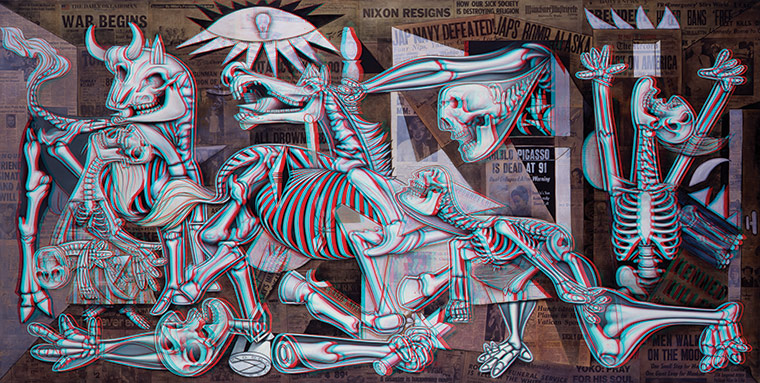
photo via: Guardian

4. Tristan Eaton's 3D Art Book
Art books today just aren't like how it used to be in the good old days. It's better! A new book compiled by designer Tristan Eaton features over 100 works by up-and-coming artists, all in a 3D effect. Each page requires you to wear lo-fi red and blue 3D specs to bring you a completely new way of viewing art.
(source: Guardian)

March 17, 2011

Today's Startling Realities...

photo via: Inhabitat

Libya holds Africa's largest crude oil reserves, so the world feels the impact.

Because their oil supplies have been disrupted, oil prices rose nearly 7% and the conflict shows no sign of subsiding.

The country's daily production of 1.6 million barrels has declined by more than half, leading the cost of a barrel of oil to reach a record high of $107.  This is the highest level since September 2008.

Drivers have noticed the impact as pump prices increased across the United States and the rest of the world.

As a precautionary initiative, Spain recently lowered its highway speed limits to reduce oil usage and will decrease train fares by 5 percent -- an incentive to get people to use public transportation.

Many food colorings are added to food to make the more attractive, and many 
of those food colorings are made from petroleum. via: Hufingtonpost

However as oil prices rise, it is not only the gasoline we should worry about but also the availability of petroleum bi-products.

In our day-to-day lives oil is not limited to re-fueling our automobiles. From what we eat to cameras, to aspirin, to clothes, to refrigerators and makeup we probably use more products containing petroleum than those without.

The rising prices of oil reminds us how dependent we are on this limited resource.  And more importantly, as we see how easily the prices can sway, we are face-to-face with the startling reality that our dependency in no way takes into consideration of sustainability.

While oil prices remain uncertain, rethinking some of our daily habits and being more conscience and careful of our resources and what we use is a very good idea.

Carpooling to work, using environmentally-friendly products, vacation at near home locations and engaging in old-school entertainment such as board games and cards might be the next up-and-coming trends.

Below are just a few alternatives to an oil-dependent lifestyle -- choices that can help us transition to a more sustainable life.

photo via: Inhabitat

1. Samsung's Solar-Powered LCD Television.  Samsung unveiled a solar-powered zero energy LCD television. The screen is transparent and it's technology can be applied to digital window blinds and storefront displays. (via: Inhabitat)

photo via: NY Times
2. Monopoly Live. Hasbro recently announced a new version of their classic game Monopoly -- Monopoly Live.

Set for release later this fall, the game is intended to bring back the lost entertainment of digital-free, face-to-face interactive board games.

Aiming to lure the 8-12 year old bracket, the game has been simplified and adjusted to a more fast-paced speed, set to compete against the more popular on-line games. (via: NY Times)

photo via: Springwise

3. Wind-powered Machine Knit.  Wind power takes on a whole new level as London-based Dutch designer Merel Karhof's reveals his creation The Knitting Factory which harnesses wind to knit a continuous series of winter scarves.  A video on YouTube demonstrates the machine "in action".

photo via: Inhabitat

4. Chevrolet Volt.  General Motors announced it will double the production of the Chevrolet Volt -- their extended-range electric car.

The Volt has a hybrid gas-electric engine system providing a gas engine-extended range of 300 miles to prevent drivers from being stuck without a charge (other electric vehicles get about 100 miles per charge).

Earlier this month, Toyota also announced the "Toyota Global Vision" -- a plan to launch 10 more hybrid vehicles by 2015.

We truly do hope electric cars will soon be the norm rather than the alternative.

From last week's high of $107/barrel, this week's oil price is down to $98 -- the result of Japan's shaken economy.

In the last few days, we have directly experienced what we cannot predict and it's direct impact on our day-to-day lives.

And although it may be a frightening, there ARE changes we can make in our lives thereby contributing to easing the potential damage.  We can start by being more aware, doing our best to save what is left.


photo via: Good 

Today we end this post our thoughts turn to the nation and people of Japan -- in addition to those many others who suffer injustice, tragedy -- both man-made and natural.

We share Reuter's list of several trustworthy organizations -- those doing their best to provide aid to victims of the Japan's earthquake and tsunami. GOOD also has an updated list of how you can help -- whether its through money or other donations, time and energy, or coding skills, the opportunities are limitless.


It is in times like these we are reminded how we are all interconnected. Please also do not forget about the crisis in the Middle East. Violence in Libya has lead tens of thousands of people to flee the country and cross to neighboring borders. With hundreds dead and thousands injured, many non-profit organizations need our help. Please consider making a donation -- we can all make a difference.

March 14, 2011

THE NATION AND PEOPLE OF JAPAN NEED YOUR HELP !

Please read and  consider making a donation.

http://kristof.blogs.nytimes.com/2011/03/11/sympathy-for-japan-and-admiration/


http://www.appleinsider.com/articles/11/03/14/apple_accepts_itunes_donations_att_offers_free_calls_to_japan_in_wake_of_disaster.html

March 10, 2011

Fashion's Fresh Faces

From teenage fashion bloggers sitting front row of top runway shows to fresh-faced twenty-somethings straight out of design school producing the must-see shows, the forefront of New York fashion rests in the hands of a youthful generation. With unscathed creativity, passion, and the first to embrace technology and social media, the young dare to be bold and prove that age really is just a number.

Today, we highlight several of the leading young fashion designers, sharing their success stories and why they deserve to be on the look out. All with their own unique beginnings, each carry a distinct vision that has brought them to where they are today. Here are our top five picks, completely different in style, but united by their entrepreneur spirit and strong influence they bring in today's fashion.

photo via: WSJ
1. Jason Wu
Jason Wu became an overnight sensation when Michelle Obama danced the night away dressed in one of his gowns at the inaugural ball. That night, at the tender age of 26, Wu became an instant household name and his career skyrocketed into what many designers spend years dreaming to achieve. Today, two years later, Wu has expanded to a globally recognized empire of ready-to-wear, bridal, handbags, and shoes. On his way of building a global luxury brand, his name is carried in over 130 stores world-wide, and an opening of his first flagship store in New York City is one of the next things on his check list.

Recognized for opulence and an effortless elegance, Wu brings royal decadence to New York's traditional sportswear scene that is like no other. His latest fall/winter collection showcases more than 15 different types of lace, hand-worked Swarovski crystal beading, luxe sweatshirts, and show stopping floor-length ball gowns. In a very short period of time, Wu has proven to be far beyond just a go-to cocktail dress designer and has become a personal favorite to the social elite and Hollywood's most glamourous.

photo via: Fashionista

2. Vena Cava
Most business men would be hesitant to suggest friends or lovers becoming business partners. But we know in fashion, this could sometimes be a designer's best decision. We've all seen the success of Viktor & Rolf and Dolce & Gabbana so in some cases, like we said earlier, two really is better than one.

Both raised in California, Sophie Buhai and Lisa Mayock met in the west before both left for New York to attend the prestigious Parsons School of Design. At the end of their education, when their work wasn't selected for the Senior Thesis Show, instead of giving up, they decided to put together their own show three weeks later after graduation. From what began on their living room floor eight years ago, the design duo now sells their collections all throughout the world.

The two aren't afraid to take on additional projects on top of managing their own label. Stating that trying new things is key to keeping their business moving forward, Vena Cava has a long list of collaborations, including Gap, Via Spiga, Aqua for Bloomingdale's, and Converse. The next retailer in line is rumored to be Uniqlo.

photo via: StyleList

3. Alexander Wang
Building a name out of a wardrobe inspired by the "model-off-duty" look, Alexander Wang is a favorite, and probably a friend of, the coolest downtown it-girls. With an approximately $25 million business at a young age of 27, it's clear that Wang knows what women want. With his first flagship store recently launched in Soho, Wang is just getting started.

One of his strengths that really helped build his success is his strong relationship with his family. We all know the saying "blood is thicker than water," but that is truly the motto in Wang's fashion empire. His brother is the chief principal officer and his sister-in-law is the CEO. His mother also owns a manufacturing business in Shanghai. Former Barney's Creative Director Julie Gilhart quotes the family "really knew about production," an advantage Wang had over many other young designers. From the very beginning, his family was extremely supportive of his dream and encouraged him with all that they could offer.

photo via: BlackBook

Wang is often criticized as a designer who makes "affordable" or "wearable" clothes. And although some may see this as an insult, Wang doesn't seem to care as long as he knows that he's doing the right thing. His debut started just around when the economic downturn put a tight strap on everyone's wallets. And although this was a tough period for most, he saw this as an opportunity to redefined luxury in an economically unstable era. From his $74 t-shirts to $1,200 dresses, his goal is to make every woman a Wang Woman.

photo via: Ecouterre

4. Tara St. James
If grades were ever issued to fashion designers, Tara St. James deserves an A+. The recipient of the 2011 Ecco Domani Award for Sustainable Design, Tara St. James is the founder of the label Study NY, launched in September 2009. An inspiration to all, St. James integrates zero-waste pattern making, recycled textiles, organic fabrics, and collaborations with artisans all around the world to create fashion forward, thoughtful pieces. For her most recent collection, she collaborated with CPALI, a nonprofit that works to prevent deforestation in Madagascar, and Madres & Artesanas, a women's cooperative in Bolivia.

Unlike many designers, St. James is very open with her work and encourages young designers to go green. With her Study Hall program, interns work side by side the designer to develop and produce their own sustainable mini collections. Like an open book, St. James does not hold back in lending a hand.

photo via: Fashioner
5. Joseph Altuzarra
Joseph Altuzarra may be Parisian by birth, but he has the wit and cool of a true New Yorker. Although he's based in New York, Altuzarra spends almost an equal amount of time on the other side of the sea. Bringing the two worlds together, his sexy, body-con, sophisticated style has often been compared with the legendary Tom Ford. And with an impressive resume that includes work experience at Marc Jacobs, Proenza Schouler, and Givenchy, Joseph Altuzarra put his time in both cities before launching his own name-sake label in 2009.

Although Altuzarra has the credentials to back his talent, the designer also gives credit to the Internet. He states, "You can build a brand very fast now, especially with bloggers and how fast images can get out -- the message just goes out faster and stronger than ever before." The designer, like many today, saw the wealth of information and communication freely available in the cyber world and took advantage of it. And while it means there are thousands of more designers trying to get noticed, instead of being blurred with the rest, Altuzarra proves that he is one worth noticing. 
 
Creative Commons License
MBF Trend Talk by MBF Trend Consulting is licensed under a Creative Commons Attribution-Noncommercial-No Derivative Works 3.0 United States License.
Based on a work at mbf-trendtalk.blogspot.com.